
The Simple Daily Habit That Can Reduce Anxiety: How Gratitude Changes the Brain
Therapy for Anxiety in Colorado Springs
This morning I woke up in a mood. I felt a little anxious, I felt very edgy. I felt upset about some things that are totally out of my control.
I did my regular routine of stepping outside to get some morning light, do some grounding, and breathe to help my body relax.
Then I shifted my attention to gratitude.
I scanned through my entire day yesterday, hour by hour, and noted all the things going well. I brought my attention to the good things in my life that I am genuinely grateful for.
My entire mood changed. Energy and excitement replaced worry and emotion. All the problems and feelings got smaller and smaller, until I could barely connect to them anymore. My focus shifted in a way that moved me forward for the day.
A daily gratitude practice can be a surprisingly powerful tool for reducing anxiety. Research suggests that gratitude affects brain systems involved in attention, emotion regulation, meaning, and threat processing. Practiced consistently over time, gratitude may also help counterbalance our natural negativity bias, helping us become more likely to notice and remember what's going well, rather than automatically focusing on what could go wrong.
The Power of Gratitude to Change How You Feel
I started a gratitude practice a long, long time ago, when I was in my 20s. Funny enough, the inspiration came from an Oprah magazine. I read an article about the life changing power of gratitude, and started keeping a hand written gratitude journal (now I keep it in my phone, but at the time iPhones didn’t exist yet, ha!).
I have always been a person a little prone to worry - I notice everything, and think deeply about things, which can be both a superpower and a recipe for anxiety all at the same time (if you know you know!). But the wildest thing began to happen… as I committed to keeping a daily gratitude journal of at least ten things I was grateful for, no repeating, anxiety reduced and a sense of joy increased.
Finding ten new things to be grateful for each day takes some effort. I started going through each day being very intentional to look for good things that were happening so that I would have things to write down later.
Someone held a door open for me… how kind!
I got to pet a cute dog on my walk… made me smile!
The view out my windows is amazing… so grateful!
Of course there are big things to be grateful for, but very often when I stopped to notice, it was the little things that are easy to overlook that added joy and wonder to my life. I felt, overall, happier.
Then another unexpected thing started to happen… other people started expressing gratitude around me, and for me. It was like it was contagious. The gratitude practice was so simple, but profoundly life changing.
As it turns out, the life changing power of gratitude is well documented in research and grounded in neuroscience.
Gratitude Affects the Parts of Your Brain Connected to Anxiety
Gratitude and anxiety both involve brain systems responsible for attention, emotion and meaning-making. Research suggests that intentionally practicing gratitude engages areas of the prefrontal cortex involved in emotional regulation and can influence communication between the prefrontal cortex and the amygdala - one of the brain regions involved in detecting threat and raising anxiety. Over time, a gratitude practice may help shift what our brains notice and attend to, reducing feelings of anxiety and increasing a sense of contentment.
Anxiety asks the brain to scan for what could go wrong. Gratitude deliberately asks it to notice what is good, safe, meaningful, or already okay.
Neurological Benefits of Gratitude
There are many demonstrated neurological benefits of gratitude. If you love neuroscience, read on! If not, you can skip this part and know that gratitude isn’t just a simple way to “think positive” - it’s a powerful way to help your brain work more efficiently.
Gratitude engages the medial prefrontal cortex and anterior cingulate cortex, which can help with emotion regulation, social connection, and decision making.
Practicing gratitude may produce effects that persist beyond the moment of feeling grateful, leading to greater neural modulation in the medial prefrontal cortex which is responsible for emotion regulation, meaning making, and learning from experience.
Gratitude can affect networks involved in emotional regulation and motivation, and is associated with changes in brain-heart coupling, having the ability to lower heart rate and calm the nervous system.
Gratitude can modulate threat processing, calming the amygdala, resulting in reduced anxiety.
Gratitude engages reward-related circuitry, which leads to recognizing and valuing rewarding or beneficial experiences over feeling preoccupied with negative experiences and worry.
Gratitude Can Balance the Brain’s Natural Tendency Towards “Negativity Bias”
Humans have a well-established tendency to give negative information disproportionate attention and weight. Threatening or unpleasant information can capture attention readily, influence learning and memory, and affect judgments more strongly than equivalent positive information. This is part of our hard-wired survival system - failing to notice a threat historically carried a much greater cost than failing to notice something pleasant.
Anxiety can amplify that tendency further, particularly the tendency to preferentially attend to threat.
There's experimental evidence that attention is trainable. In one study, researchers trained participants to preferentially attend to positive rather than neutral information. When subsequently exposed to highly negative images, those participants spent less time looking at the negative material. A regular gratitude practice may help counterbalance our natural negativity bias by training us to notice, encode, and remember more of what is positive in our lives.
How to Start a Daily Gratitude Practice
This is shockingly simple for how powerful it can truly be.
Just pick a time that works for you on a daily basis - it may be first thing in the morning, when you’re settling down at night, on a lunch break, whatever works best for your life - and identify three specific things you're genuinely grateful for. Try not to repeat things day to day. What you put in your gratitude journal doesn’t have to be significant or monumental - in fact, learning to notice the tiny moments that are easy to miss is part of the practice.
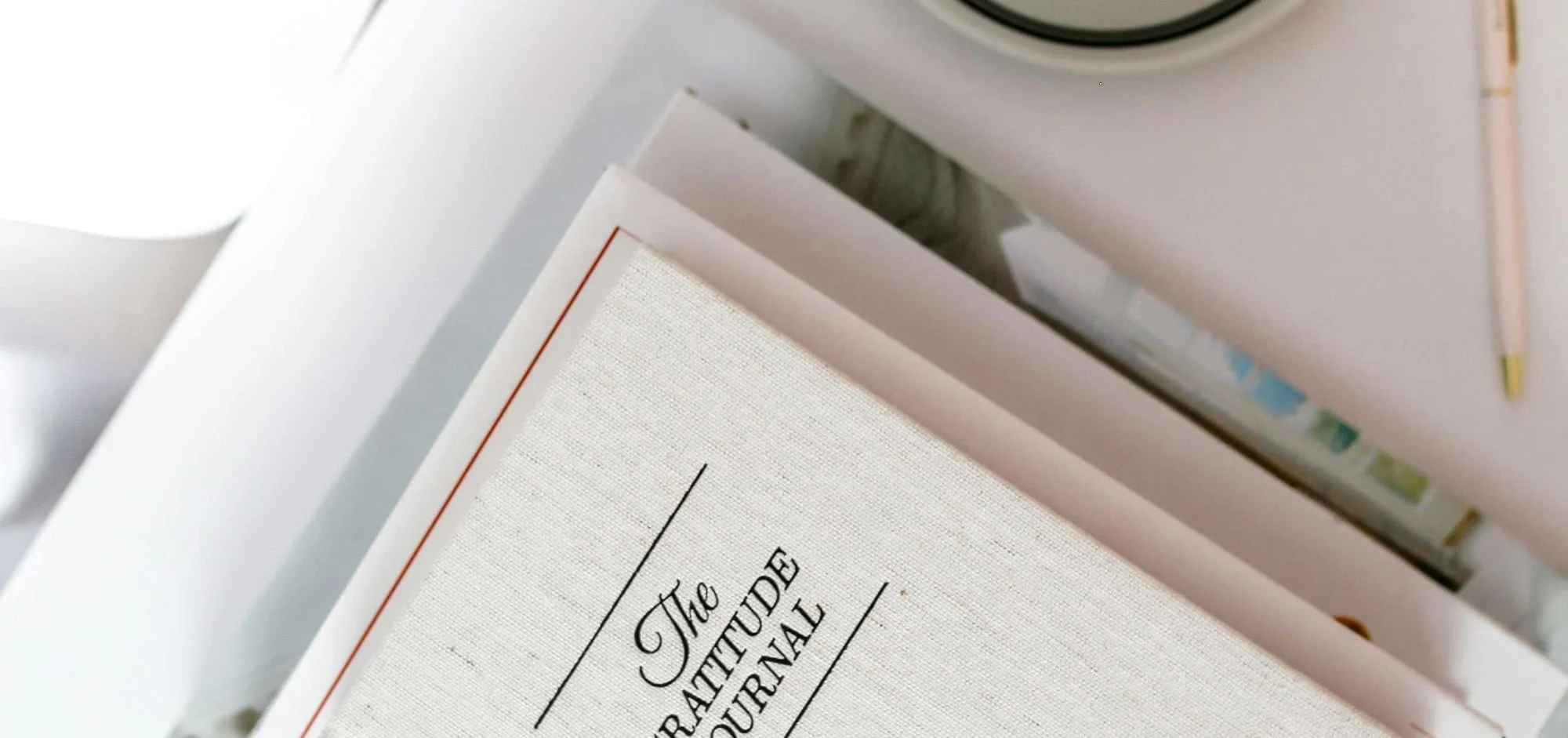
If you love journaling, you can treat yourself to a beautiful journal and make it a special place to document your gratitude. If journaling is not your thing, you can make a bullet point note in your phone, a document on your computer, a post it note on your desk… this is your practice and you get to make it work for you!
I do love a pretty journal, but because it’s the simplest way for me to do it consistently, I have a note in my phone for the current year, with a daily entry of what I’m grateful for. I try to list ten things because that challenges me to really dig for what’s going well when my mind wants to focus on what’s not. Often, the days when it's hardest to come up with ten are the days when I benefit from the practice the most.
Gratitude is Not Just Positive Thinking
I remember a day, many years ago, when my husband called and told me his tire fell off while driving at a high speed. He was with one of our kids, they were okay, but stranded until someone got there to help. My initial response was definitely not gratitude - but as I thought about it and tried to put it in perspective I realized there were several things I could be grateful for… everyone was okay… we had the means to replace the tire… we had help available… this problem was solvable.
Gratitude is not just thinking positive - we lost a tire and now half the family is stranded on the road and I’m so happy! - your brain is too smart to believe a lie. Gratitude is intentionally scanning for what’s good, or positive, or even just neutral, and choosing to focus attention on that. This is important, because what we repeatedly direct our attention toward affects not only how we feel, but also what we become more sensitive to noticing.
Gratitude isn't pretending something bad is good. It's widening our attention enough to notice that the bad thing isn't the only thing that's true.
I’ll be honest - after doing this gratitude practice for decades, it doesn’t always feel life changing. There are some times it’s harder to connect with gratitude. There are some experiences that come with hard feelings, no matter how much gratitude we try to muster up. Gratitude doesn’t take away the need to feel things, and to acknowledge emotions connected to painful experiences. It’s kind of like working out for your body - some days you don’t feel like it, in some seasons it’s harder to have the time and energy, but over a lifetime a commitment to physical fitness helps your body stay healthy - a regular gratitude practice is fitness for your brain.
